Avoid CWISA-103 Failure: Crucial Insights Before You Start
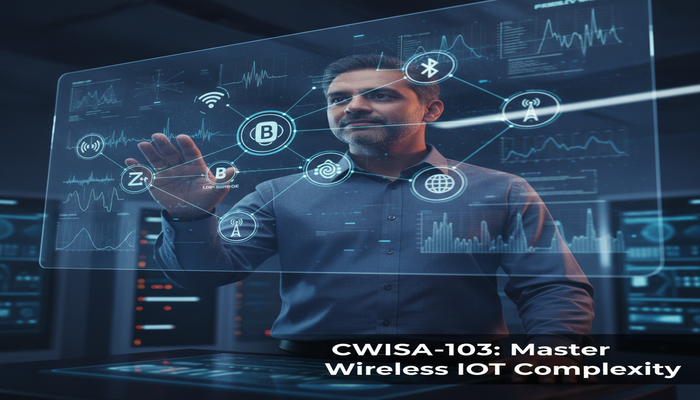
Embarking on the journey to become a certified professional in the burgeoning field of Internet of Things (IoT) wireless solutions is both exciting and challenging. The CWNP Certified Wireless IoT Solutions Administrator, identified by the exam code CWISA-103, represents a significant milestone for anyone aspiring to a dedicated CWISA wireless IoT administrator role. This certification validates your expertise in managing and securing wireless IoT networks, a skill set increasingly vital in our connected world. However, like any advanced certification, the path to success with the CWISA-103 exam is fraught with potential pitfalls and demands a strategic approach.
Many candidates underestimate the breadth and depth of knowledge required for the Wi-Fi IoT Solutions Administrator exam. It's not just about understanding Wi-Fi; it's about grasping the intricate nuances of various wireless technologies as they apply to diverse IoT ecosystems, from industrial sensors to smart home devices. This article aims to provide you with crucial insights into the CWISA-103, offering a realistic, supportive, and honest perspective on what it takes to pass and, more importantly, to genuinely master the concepts. We'll delve into the syllabus, discuss the learning curve, outline effective study strategies, and highlight the immense benefits awaiting successful candidates. Prepare to transform your approach and avoid common failures by understanding the CWISA-103's true demands before you even begin.
Understanding the CWISA-103 Exam: Your Foundation for Success
The CWISA-103 exam, officially known as the Wireless IoT Solutions Administrator exam, is a specialized certification offered by CWNP, the leading vendor for enterprise Wi-Fi certifications. It's designed to validate the skills and knowledge of IT professionals responsible for administering and troubleshooting wireless IoT networks. This certification is crucial for anyone looking to solidify their expertise in the rapidly expanding IoT landscape, which relies heavily on robust and secure wireless communication.
As a CWISA wireless IoT administrator, you'll be tasked with everything from selecting appropriate wireless technologies to designing, implementing, and supporting complex IoT solutions. This isn't a theoretical exam; it demands practical understanding and the ability to apply concepts to real-world scenarios. The certification ensures that professionals can effectively manage wireless IoT infrastructures, ensuring optimal performance, security, and scalability for a wide array of devices and applications.
Let's look at the key details for the CWISA-103 exam:
- Exam Name: Wireless IoT Solutions Administrator
- Exam Code: CWISA-103 CWISA
- Exam Price: $275 USD
- Duration: 90 minutes
- Number of Questions: 60
- Passing Score: 70%
These details highlight the time-pressured nature of the exam and the need for a solid grasp of the material to achieve the required 70% passing score. Each question carries weight, and a thorough understanding, rather than mere memorization, will be your greatest asset.
Why the CWISA-103 Matters for a Wireless IoT Administrator
In today's interconnected world, IoT devices are ubiquitous, transforming industries from manufacturing and healthcare to retail and smart cities. However, the proliferation of these devices also brings challenges related to connectivity, compatibility, and security. A certified CWISA wireless IoT administrator plays a pivotal role in overcoming these challenges.
This certification specifically addresses the unique aspects of wireless communication in IoT environments, which often differ significantly from traditional Wi-Fi networks. It covers diverse wireless standards, power constraints, spectrum considerations, and security protocols tailored for IoT. By earning your CWNP Certified Wireless IoT Solutions Administrator credential, you demonstrate your capability to design resilient, efficient, and secure wireless IoT solutions, making you an invaluable asset to any organization leveraging IoT technology.
Navigating the CWNP CWISA-103 Exam Syllabus: A Detailed Breakdown
A comprehensive understanding of the detailed CWNP CWISA-103 exam syllabus is the cornerstone of effective preparation. The syllabus outlines the specific CWISA Wireless IoT Solutions Administrator exam topics you'll be tested on, along with their respective weightages. This provides a clear roadmap, allowing you to allocate your study time efficiently and focus on areas with higher percentages. Let's break down each domain and explore what a prospective CWISA wireless IoT administrator needs to master.
Wireless Technologies - 15%
This foundational section sets the stage by exploring the various wireless technologies used in IoT. It's not limited to Wi-Fi but extends to a broad spectrum of protocols. For a CWISA wireless IoT administrator, understanding the strengths and weaknesses of each technology is paramount for effective solution design. Key areas include:
- Wi-Fi (802.11): While often associated with traditional networking, Wi-Fi plays a significant role in many IoT deployments, particularly those requiring higher bandwidth or integration with existing IT infrastructure. Candidates must understand different Wi-Fi standards (e.g., 802.11ah HaLow, 802.11ax), their frequency bands, data rates, and power consumption profiles in an IoT context.
- Bluetooth/Bluetooth Low Energy (BLE): Crucial for short-range, low-power applications like wearables, asset tracking, and personal area networks. Knowledge of BLE advertising, GATT profiles, mesh networking, and security features is essential.
- Zigbee: A popular mesh networking protocol for home automation, smart lighting, and industrial IoT. Understanding its architecture, device types (coordinator, router, end device), and security mechanisms is vital.
- Z-Wave: Another prominent mesh protocol for home automation, often compared with Zigbee. Knowing its frequency, topology, and security aspects is important.
- Cellular (LTE-M, NB-IoT): For wide-area IoT applications requiring long-range communication and low power. Understanding their use cases, network architecture, and data transmission methods is critical.
- LoRa/LoRaWAN: Long-range, low-power wide-area network (LPWAN) technology for applications like smart agriculture, city monitoring, and logistics. Knowledge of its architecture, gateways, and data rates is expected.
- RFID: Radio Frequency Identification for asset tracking, inventory management, and access control. Understanding passive vs. active RFID, frequency bands, and typical deployments.
- Other Protocols: Familiarity with less common but emerging protocols relevant to specific IoT niches.
Mastering this domain requires more than just memorizing names; it demands a deep comparative analysis of when and where to deploy each technology based on application requirements, power constraints, range, and cost. This forms the basis for effective planning of wireless IoT solutions.
Radio Frequency Communications - 15%
At the heart of all wireless systems is radio frequency (RF) communication. This section delves into the fundamental principles that govern how wireless signals propagate and interact within an IoT environment. A CWISA wireless IoT administrator must possess a strong grasp of these concepts to troubleshoot connectivity issues, optimize network performance, and design reliable systems. Key topics include:
- RF Fundamentals: Understanding basic RF principles such as frequency, wavelength, amplitude, and phase. Knowledge of how these relate to signal propagation and device operation.
- Antenna Concepts: Different types of antennas (omnidirectional, directional), antenna gain, beamwidth, and polarization. How antenna selection impacts coverage and interference in IoT deployments.
- RF Math: Decibels (dB), dBm, gain, loss, and how to perform basic RF calculations to estimate link budgets and signal strength. This is crucial for predicting network performance.
- Signal Propagation: How RF signals travel through different environments. Concepts like reflection, refraction, diffraction, scattering, and absorption. Understanding how obstacles and materials impact IoT signal reliability.
- Multipath: The phenomenon where signals arrive at a receiver via multiple paths, leading to signal degradation or enhancement. How multipath affects various IoT wireless technologies.
- Interference: Sources of interference (co-channel, adjacent channel, non-Wi-Fi) and their impact on IoT devices. Strategies for identifying and mitigating interference in dense IoT environments.
- Channel Planning: Techniques for selecting and assigning wireless channels to minimize interference and maximize throughput for various IoT protocols.
- Spectrum Analysis: The use of spectrum analyzers to visualize RF activity, identify interference, and troubleshoot wireless issues. Understanding how different IoT protocols appear on a spectrum analyzer.
This domain requires a blend of theoretical knowledge and practical intuition. Being able to visualize RF behavior in different scenarios is key to successfully supporting wireless IoT solutions.
Planning Wireless Solutions - 20%
The planning phase is critical for the success of any wireless IoT deployment. This section focuses on the methodologies and considerations involved in designing robust and scalable IoT networks. For a CWISA wireless IoT administrator, effective planning minimizes deployment costs, maximizes performance, and ensures long-term reliability. Key areas include:
- Site Surveys: Performing both predictive and actual site surveys for various IoT wireless technologies. Understanding the different tools and techniques used for RF measurement and analysis in specific IoT environments (e.g., warehouse, smart home, industrial plant).
- Requirements Gathering: Translating business and application requirements into technical specifications for the wireless IoT infrastructure. Considerations include device density, data rates, latency, power consumption, security, and scalability.
- Technology Selection: Choosing the most appropriate wireless technology (or combination of technologies) based on the gathered requirements, considering factors like range, bandwidth, battery life, cost, and environmental conditions.
- Network Architecture Design: Developing the logical and physical layout of the wireless IoT network, including device placement, gateway locations, backhaul considerations, and integration with existing IT infrastructure.
- Power Management: Strategies for optimizing battery life and power consumption for IoT devices, which is often a critical factor. Understanding sleep modes, duty cycles, and energy harvesting.
- Security Planning: Integrating security from the ground up, including authentication, encryption, authorization, and network segmentation specific to IoT devices and their communication patterns.
- Scalability and Future-Proofing: Designing solutions that can accommodate future growth in device numbers, data volumes, and new applications without requiring a complete overhaul.
- Regulatory Compliance: Awareness of local and international regulations pertaining to wireless spectrum usage and IoT device operation.
This section is highly practical, requiring candidates to think like an architect, balancing various constraints and objectives to create an optimal design. It directly impacts the eventual success or failure of wireless IoT solutions.
Implementing Wireless Solutions - 25%
With planning complete, the next crucial step is implementation. This domain covers the practical aspects of deploying, configuring, and commissioning wireless IoT networks. This is where the theoretical knowledge from planning is put into action. A skilled CWISA wireless IoT administrator must be proficient in hands-on tasks and troubleshooting during deployment. Key topics include:
- Device Provisioning: The process of enrolling and configuring IoT devices onto the network, including initial setup, firmware updates, and credential management. Understanding automated provisioning methods.
- Network Configuration: Configuring wireless access points, gateways, and network controllers specifically for IoT protocols. This includes setting up SSIDs, security policies, VLANs, and QoS (Quality of Service) for different types of IoT traffic.
- Integration with Cloud Platforms: Connecting IoT devices and gateways to cloud-based IoT platforms (e.g., AWS IoT, Azure IoT Hub, Google Cloud IoT Core) for data ingestion, processing, and application integration. Understanding API interactions and data formats.
- Sensor Deployment and Calibration: Proper physical placement of sensors and actuators, ensuring optimal signal coverage and minimizing environmental interference. Calibration procedures for accurate data collection.
- Network Hardening: Implementing security best practices during deployment, such as disabling unnecessary services, changing default credentials, implementing strong authentication, and ensuring secure boot processes for devices.
- Testing and Verification: Post-deployment testing to verify coverage, connectivity, data flow, security, and performance against the original design specifications. Tools for network validation.
- Documentation: Creating comprehensive documentation of the deployed network, including network diagrams, configuration details, IP addressing schemes, and troubleshooting guides. This is critical for future maintenance and support.
This section demands practical skills and attention to detail. Mistakes during implementation can lead to significant operational challenges down the line. It's about ensuring the blueprint translates perfectly into a functioning system.
Supporting Wireless Solutions - 25%
Once deployed, wireless IoT solutions require ongoing support, monitoring, and troubleshooting. This final, and heaviest-weighted, section focuses on maintaining the health, performance, and security of operational IoT networks. A competent CWISA wireless IoT administrator is expected to quickly diagnose and resolve issues, ensuring continuous operation. Key areas include:
- Monitoring Tools and Techniques: Utilizing network monitoring systems (NMS), IoT dashboards, and specialized tools to track device status, network performance metrics, connectivity issues, and security events.
- Troubleshooting Methodologies: Systematic approaches to diagnosing and resolving common IoT wireless network problems, such as connectivity failures, intermittent connectivity, performance degradation, and authentication issues.
- RF Troubleshooting: Applying RF principles and using spectrum analysis to identify and mitigate sources of interference, poor coverage, and signal quality problems impacting IoT devices.
- Security Incident Response: Understanding how to identify, respond to, and mitigate security breaches specific to IoT networks, including unauthorized access, data tampering, and denial-of-service attacks.
- Firmware and Software Updates: Managing the lifecycle of IoT device firmware and software, including planning and executing updates to address vulnerabilities, improve performance, and add new features.
- Performance Optimization: Techniques for fine-tuning the wireless IoT network to improve data throughput, reduce latency, and optimize power consumption based on ongoing monitoring and analysis.
- Scalability Management: Strategies for expanding the network to accommodate new devices, applications, and increased data traffic without compromising existing performance or security.
- Cloud Platform Management: Monitoring and managing the integration points and data flow between the IoT network and cloud-based services.
- Reporting and Analytics: Generating reports on network performance, security posture, and device health to provide insights for stakeholders and inform future decisions.
This domain emphasizes the day-to-day operational responsibilities of a CWISA wireless IoT administrator. It's a continuous cycle of monitoring, analysis, and proactive management to ensure the longevity and effectiveness of the IoT infrastructure.
The Realistic Learning Curve for the CWISA Wireless IoT Administrator
Preparing for the CWISA-103 exam is not a sprint; it's a marathon that demands dedication, strategic planning, and a deep dive into complex technical subjects. The tone for this journey is realistic, supportive, and honest because understanding the challenges upfront can prevent frustration and provide a clearer path to success. The CWISA wireless IoT administrator role demands a comprehensive understanding, not just rote memorization.
One of the primary challenges is the sheer diversity of wireless technologies covered. Unlike certifications that might focus primarily on Wi-Fi, the CWISA-103 expects you to be conversant with Wi-Fi, Bluetooth/BLE, Zigbee, Z-Wave, cellular IoT (LTE-M, NB-IoT), LoRa/LoRaWAN, and even RFID. Each of these has its own protocols, use cases, and deployment considerations. Juggling this array of standards, understanding their interdependencies, and knowing when to apply each one appropriately can be daunting.
Another area that often trips up candidates is the underlying Radio Frequency (RF) Communications. While you don't need to be an RF engineer, a solid grasp of RF math, signal propagation, interference, and spectrum analysis is crucial. These are concepts that require visualization and analytical skills, often benefiting from hands-on lab experience with spectrum analyzers or signal generators, which might not be readily available to all learners. Many aspirants often search for 'how to prepare for CWNP CWISA-103 exam' but overlook the foundational RF knowledge required.
The exam objectives also push beyond theory, requiring an understanding of practical planning, implementation, and support of wireless solutions. This includes site surveys, network architecture design, device provisioning, troubleshooting methodologies, and security incident response. This practical emphasis means that candidates with limited real-world experience in deploying and managing IoT networks may find these sections particularly challenging. The CWISA-103 exam objectives are designed to test your ability to apply knowledge, not just recall it.
Finally, the security aspects of IoT wireless networks are a critical component, and often a complex one. Understanding vulnerabilities specific to various IoT protocols, implementing robust authentication and encryption, and responding to security incidents requires a dedicated focus. The unique constraints of IoT devices, such as limited processing power and battery life, often necessitate different security approaches than those found in traditional IT environments, making the 'IoT wireless network security certification' aspect quite distinct.
To truly avoid CWISA-103 failure, you need to acknowledge these complexities and approach your studies with diligence and patience. Embrace the learning curve as an opportunity to build a robust skill set that will make you an indispensable CWISA wireless IoT administrator.
Essential Resources for Your CWNP Certified Wireless IoT Solutions Administrator Study Guide
Developing a comprehensive CWNP Certified Wireless IoT Solutions Administrator study guide is paramount for navigating the complexities of the CWISA-103 exam. It's not just about accumulating materials; it's about strategically selecting and utilizing the best resources to build a solid foundation of knowledge and practical skills. For effective preparation, consider a multi-pronged approach that includes official documentation, reputable training, and practical experience.
Official CWNP Resources
Your first and most authoritative source of information should always be the official CWNP materials. The official CWNP CWISA certification page provides the most up-to-date syllabus, exam objectives, and often recommended study guides or books. These resources are designed by the creators of the exam, ensuring alignment with the topics and the level of detail expected.
- CWISA Official Study Guide: If available, an official study guide or book published by CWNP is usually the best starting point. These guides typically break down each exam objective and provide in-depth explanations.
- Online Learning Resources: CWNP often offers official online training modules or virtual classrooms. These structured courses can provide valuable insights and practical demonstrations from experienced instructors. Consider investing in a CWNP CWISA training course if your budget and schedule allow.
- Practice Exams: While not always official, reputable practice exams can help you gauge your understanding and familiarize yourself with the question format. Search for CWNP CWISA-103 practice questions and CWNP CWISA-103 sample questions from trusted sources to integrate into your study plan.
Third-Party Study Materials
Beyond the official sources, there are often high-quality third-party resources that can supplement your CWNP Certified Wireless IoT Solutions Administrator study guide:
- Books and E-books: Look for books by well-known authors in wireless networking and IoT. While specific CWISA-103 books might be rare, general books on Wi-Fi, Bluetooth, Zigbee, LoRaWAN, and IoT security can fill knowledge gaps.
- Online Courses: Platforms like Udemy, Coursera, or LinkedIn Learning might offer courses on wireless IoT. While these may not be directly tailored to the CWISA-103, they can provide excellent foundational knowledge and practical insights into various wireless IoT solutions administration topics.
- Technical Blogs and Forums: Websites and communities dedicated to wireless IoT can be invaluable for understanding real-world scenarios, troubleshooting tips, and staying updated on emerging technologies. These can also be a good place to find discussions about best CWNP CWISA study material.
Hands-On Experience: The Best Study Material
No amount of reading can replace practical experience. For an aspiring CWISA wireless IoT administrator, hands-on labs and real-world projects are arguably the best CWNP CWISA study material:
- Lab Environment: Set up a small home lab with various IoT devices (e.g., smart plugs, sensors, development boards like Raspberry Pi or ESP32), Wi-Fi access points, Bluetooth dongles, and perhaps even a Zigbee or LoRaWAN gateway. Experiment with connecting these devices, configuring their networks, and capturing traffic.
- Software Tools: Familiarize yourself with tools like Wireshark for packet analysis, spectrum analyzers (hardware or software-based), and network monitoring utilities.
- Development Boards: Work with microcontrollers and development boards to understand how IoT device firmware functions, how sensors communicate, and how data is transmitted over various wireless protocols. This will deepen your understanding of the CWISA Wireless IoT Solutions Administrator exam topics.
By combining official resources, credible third-party content, and extensive hands-on practice, you can build a robust study plan that not only helps you pass the CWISA-103 but also prepares you for a successful career as a CWISA wireless IoT administrator. Remember, the goal is not just certification but true expertise.
Mastering the CWISA-103 Exam Topics: Strategies for Success
To truly avoid CWISA-103 failure, a well-defined set of strategies is indispensable. It's not enough to simply read through material; you need to actively engage with the CWISA Wireless IoT Solutions Administrator exam topics and reinforce your learning through various methods. Here are some effective strategies for tackling the content and ensuring you're fully prepared.
Structured Study Plan
Break down the CWNP CWISA-103 exam syllabus into manageable chunks. Allocate specific time slots for each domain, giving more attention to sections with higher weightage (Planning, Implementing, and Supporting Wireless Solutions). A structured plan helps maintain consistency and ensures all topics are covered comprehensively.
- Daily/Weekly Goals: Set realistic goals for what you want to achieve each day or week.
- Review Sessions: Regularly schedule review sessions to revisit previously studied material and reinforce concepts.
- Mind Maps and Flashcards: Use these tools to summarize key concepts, protocols, and their characteristics. This is especially useful for the diverse Wireless Technologies domain.
Deep Dive into Each Wireless Technology
For the 'Wireless Technologies' section, don't just know their names. Understand:
- Operating Frequencies: Which spectrum does it use (2.4GHz, 5GHz, sub-GHz, licensed/unlicensed)?
- Key Characteristics: Range, data rate, power consumption, topology (star, mesh), and suitability for specific IoT applications.
- Security Mechanisms: What authentication and encryption methods does it employ?
- Use Cases: Where is it typically deployed, and why is it preferred over other technologies in those scenarios?
Demystify RF Communications
RF concepts can be abstract. Make them concrete:
- Visual Aids: Watch videos explaining RF propagation, antenna patterns, and interference.
- RF Math Practice: Work through examples of dB, dBm, link budget calculations. Understanding how signal strength changes with distance and obstacles is crucial.
- Spectrum Analysis: If possible, get hands-on with a spectrum analyzer (even a software-defined radio (SDR) with appropriate software can help visualize the spectrum) to see how different wireless signals appear.
Practical Application for Planning, Implementing, and Supporting
These are the heaviest-weighted sections. Focus on applying your knowledge:
- Scenario-Based Learning: Think about real-world IoT scenarios (e.g., smart factory, agricultural monitoring, smart building) and mentally walk through the planning, implementation, and support steps.
- Design Exercises: Practice designing a wireless IoT network given specific requirements. Consider device types, coverage areas, data rates, security needs, and environmental factors.
- Troubleshooting Drills: Imagine common IoT network issues (e.g., device not connecting, intermittent data, poor battery life) and outline a systematic troubleshooting process. Consider a comprehensive guide to best study tips for CWNP certifications to enhance your approach.
Leverage CWNP CWISA-103 Practice Questions
Practice makes perfect. Incorporate CWNP CWISA-103 practice questions and CWNP CWISA-103 sample questions regularly into your study routine.
- Identify Weaknesses: Use practice tests to pinpoint areas where you consistently struggle. This allows you to re-focus your study efforts.
- Time Management: Practice answering questions under timed conditions to get used to the 90-minute duration and the 60-question limit.
- Understand Explanations: Don't just look at the right answer. Understand *why* it's correct and *why* other options are incorrect.
By diligently following these strategies, you can transform your preparation from passive reading to active learning, significantly increasing your chances of success on the CWISA-103 exam and solidifying your expertise as a CWISA wireless IoT administrator.
The Value Proposition: Benefits of CWNP Certified Wireless IoT Solutions Administrator Certification
Earning the CWNP Certified Wireless IoT Solutions Administrator certification is more than just adding a credential to your resume; it's an investment in your professional future and a clear signal of your specialized expertise. The CWNP Certified Wireless IoT Solutions Administrator benefits are manifold, ranging from enhanced career prospects to a deeper, more practical understanding of cutting-edge technology.
Enhanced Career Opportunities and Earning Potential
As the IoT landscape continues its explosive growth, the demand for skilled professionals who can design, deploy, and manage these complex wireless networks is skyrocketing. Companies across various sectors, including manufacturing, healthcare, logistics, smart cities, and agriculture, are actively seeking individuals with verified expertise in wireless IoT solutions administration. The CWISA certification positions you as a leading candidate for roles such as:
- IoT Network Administrator
- Wireless IoT Engineer
- IoT Solutions Architect
- IoT Systems Integrator
- Network Security Specialist (with an IoT focus)
The growing demand for IT professionals with specialized skills, particularly in emerging fields like IoT, often translates into higher earning potential. The CWISA credential helps you stand out in a competitive job market, demonstrating to employers that you possess the exact skills needed to tackle their IoT challenges effectively. It signifies that you are not just familiar with IoT but are capable of delivering robust and secure wireless IoT solutions.
Validation of Specialized Skills
The CWISA-103 validates a very specific and in-demand skill set. It proves that you understand the intricacies of various wireless technologies beyond standard Wi-Fi, grasp the fundamentals of RF communication in diverse environments, and can proficiently plan, implement, and support wireless IoT solutions. This holistic validation is critical for employers who need to trust that their wireless IoT administrator can handle the entire lifecycle of an IoT deployment.
It goes beyond theoretical knowledge, emphasizing the practical application of concepts, which is crucial in a field where hands-on problem-solving is a daily requirement. This certification confirms your ability to:
- Select the optimal wireless technology for specific IoT use cases.
- Design resilient and scalable IoT network architectures.
- Implement secure device provisioning and network configurations.
- Troubleshoot complex wireless connectivity and performance issues.
- Ensure the ongoing security and reliability of IoT deployments.
Industry Recognition and Credibility
CWNP is a globally recognized and highly respected vendor in the wireless networking industry. Their certifications are known for their rigor and relevance, signifying a high standard of expertise. Achieving the CWNP Certified Wireless IoT Solutions Administrator certification enhances your professional credibility and signals your commitment to excellence in the field of wireless IoT.
This recognition can open doors to professional networks, collaborative opportunities, and thought leadership within the IoT community. It also positions you as an expert who can advise organizations on their IoT strategies, helping them navigate the complexities and leverage the full potential of connected devices. In an evolving industry, maintaining current and recognized certifications like the CWISA is vital for continuous professional growth and relevance.
Demystifying CWNP CWISA Certification Requirements and Costs
Understanding the administrative side of the CWNP Certified Wireless IoT Solutions Administrator certification is just as important as mastering the technical content. This includes clarifying CWNP CWISA certification requirements, understanding the CWNP CWISA exam cost, and knowing the process to register for your exam. Being informed about these details helps streamline your journey and prevents any last-minute surprises.
Prerequisites for CWISA-103
One of the appealing aspects of the CWISA-103 certification is that there are no formal prerequisites. You don't need to hold another CWNP certification like CWNA before pursuing the CWISA. This makes it accessible to individuals with a foundational understanding of networking and a keen interest in IoT. However, while there are no *formal* requirements, CWNP strongly recommends:
- Solid networking fundamentals: A basic understanding of TCP/IP, Ethernet, and general network concepts will provide a strong base.
- Experience with wireless technologies: Prior exposure to Wi-Fi, Bluetooth, or other wireless protocols will be beneficial.
- Familiarity with IoT concepts: Understanding what IoT is, common use cases, and typical device architectures will help contextualize the material.
Although not mandatory, having a CWNA (Certified Wireless Network Administrator) certification or equivalent knowledge can significantly ease your path, as it covers fundamental Wi-Fi and RF concepts that are built upon in the CWISA. However, the CWISA-103 is designed to be self-contained enough for dedicated learners.
CWNP CWISA Exam Cost
The price for the CWISA-103 exam is $275 USD. This fee covers the cost of taking the examination at a Prometric testing center. It's important to budget for this cost, along with any study materials, training courses, or practice exams you choose to invest in. Exam prices are subject to change, so always verify the current fee on the official CWNP website or at the Prometric registration portal before making payment.
Registering for Your Exam
CWNP exams, including the CWISA-103, are administered by Prometric, a global leader in technology-enabled testing and assessment services. The process for scheduling your exam is straightforward:
- Visit the Prometric Website: Go to the schedule your CWNP exam page on the Prometric site.
- Select Your Exam: Choose the CWISA-103 exam from the list of available CWNP certifications.
- Locate a Test Center: Use Prometric's search tool to find a convenient testing center near you.
- Choose Date and Time: Select an available date and time slot that fits your schedule.
- Complete Registration and Payment: Follow the prompts to provide your personal details, confirm your selection, and make the payment of $275 USD.
- Receive Confirmation: You will receive a confirmation email with all the details of your exam appointment. Keep this safe!
It is crucial to register for the exam only when you feel adequately prepared, having completed your study plan and practice tests. Rushing the registration process can lead to unnecessary pressure and potential failure. Give yourself ample time to prepare thoroughly after understanding the CWNP CWISA certification requirements.
Securing the IoT Frontier: A CWISA Perspective on Wireless Network Security
In the world of IoT, security is not an afterthought; it's a foundational requirement. The CWISA-103 exam places significant emphasis on the security aspects of wireless IoT solutions, recognizing that a CWISA wireless IoT administrator must be proficient in protecting these networks from an ever-evolving threat landscape. Achieving an 'IoT wireless network security certification' within the CWISA framework means understanding unique challenges and implementing robust defenses tailored for IoT.
Unique Security Challenges in IoT
IoT devices often present unique security vulnerabilities due to several factors:
- Resource Constraints: Many IoT devices have limited processing power, memory, and battery life, making it difficult to implement strong encryption or complex security protocols.
- Heterogeneous Environments: IoT networks comprise a mix of devices, protocols, and vendors, leading to potential interoperability issues and inconsistent security postures.
- Physical Vulnerabilities: Devices deployed in remote or accessible locations can be susceptible to physical tampering or theft.
- Lifecycle Management: Long operational lifespans for some IoT devices mean they might be running outdated firmware with known vulnerabilities if not properly managed.
- Default Credentials: Many devices ship with weak or default credentials, making them easy targets for attackers.
- Lack of Updates: Some manufacturers do not provide regular security updates, leaving devices exposed.
These challenges underscore why the role of a knowledgeable CWISA wireless IoT administrator is so critical in safeguarding IoT deployments.
Key Security Concepts for CWISA-103
The CWISA-103 exam expects candidates to understand and apply various security principles to mitigate these risks:
- Authentication and Authorization: Implementing strong authentication mechanisms (e.g., certificates, multi-factor authentication) for devices and users. Understanding authorization frameworks to control device access to network resources.
- Encryption: Ensuring data confidentiality through appropriate encryption protocols for each wireless technology (e.g., WPA3 for Wi-Fi, AES for Zigbee, TLS/DTLS for application layers).
- Network Segmentation: Using VLANs, firewalls, and micro-segmentation to isolate IoT devices from critical enterprise networks and limit the blast radius of a breach.
- Secure Provisioning: Implementing secure methods for enrolling new devices into the network, ensuring their authenticity and preventing unauthorized devices from joining.
- Firmware Security: Ensuring secure boot, signed firmware updates, and vulnerability management processes for IoT devices.
- Physical Security: Considering physical controls for devices, gateways, and network infrastructure, especially in remote or exposed locations.
- Security Monitoring: Utilizing IoT security platforms and network monitoring tools to detect anomalies, unauthorized access attempts, and other security incidents.
- Risk Assessment: Conducting risk assessments specific to IoT deployments to identify potential threats and vulnerabilities.
Mastering these security aspects is not just about passing a section of the exam; it's about developing the critical skills needed to build trustworthy and resilient IoT ecosystems in your capacity as a CWISA wireless IoT administrator. It's a core competency that distinguishes a truly capable professional in this domain.
Achieving Your Target: Understanding CWNP CWISA Passing Score and Duration
Success on the CWISA-103 exam hinges not only on thorough preparation but also on understanding the mechanics of the test itself. Knowing the CWNP CWISA passing score and CWNP CWISA-103 exam duration allows you to calibrate your study efforts and strategy for the actual exam day. These details are crucial for managing your time and expectations during the test.
The Passing Score: 70%
To earn your CWNP Certified Wireless IoT Solutions Administrator certification, you must achieve a minimum score of 70%. This means out of 60 questions, you need to answer at least 42 questions correctly. A 70% threshold is a common standard for professional certifications and signifies a solid grasp of the subject matter. It requires more than just superficial knowledge; you need to demonstrate a comprehensive understanding across all syllabus domains.
While 70% might seem achievable, the difficulty lies in the breadth and depth of the topics. The exam includes a mix of question types designed to test recall, comprehension, and application of knowledge. There are no partial credits, so each question requires a precise and accurate answer. This emphasizes the importance of consistent study and regular self-assessment through practice questions.
Focusing on the heavily weighted sections (Planning, Implementing, and Supporting Wireless Solutions – totaling 70% of the exam) is particularly important. A strong performance in these areas can significantly bolster your chances of reaching the CWNP CWISA passing score, even if you encounter minor challenges in the foundational RF or Wireless Technologies sections.
Exam Duration: 90 Minutes
The CWISA-103 exam has a duration of 90 minutes. With 60 questions, this gives you approximately 1.5 minutes per question. This pacing is relatively quick and leaves little room for extensive deliberation on each question. Effective time management during the exam is therefore paramount.
Here's how to manage your time effectively during the CWNP CWISA-103 exam duration:
- Read Carefully: Despite the time pressure, read each question and all answer choices thoroughly. Misinterpreting a question is a common pitfall.
- First Pass Strategy: Answer all questions you are confident about on your first pass. Mark any questions you are unsure about for review.
- Elimination: For marked questions, use the process of elimination to narrow down the choices before making an educated guess.
- Don't Dwell: If you find yourself stuck on a question for more than a minute, make a best guess, mark it, and move on. You can return to it if time permits. Dwelling too long on a single difficult question can eat into time for questions you might easily answer.
- Review: If you complete all questions before the 90 minutes are up, use the remaining time to review your marked questions and any answers you felt uncertain about.
Practicing with CWNP CWISA-103 practice questions under timed conditions is the best way to prepare for this pace. It helps you develop the mental stamina and quick decision-making skills required to perform well within the allotted CWNP CWISA-103 exam duration. Understanding these details and incorporating them into your study plan is a critical step towards avoiding failure and successfully earning your Wireless IoT Solutions Administrator certification.
Beyond Preparation: What to Expect on Exam Day for CWISA-103
The day of your CWISA-103 exam can be nerve-wracking, but knowing what to expect can significantly reduce stress and allow you to focus on demonstrating your knowledge. This section provides a brief overview of the logistics and mental preparation for your Wireless IoT Solutions Administrator exam.
Before You Leave Home
- Confirm Appointment: Double-check your Prometric appointment details, including the date, time, and test center location.
- Gather IDs: Bring at least two forms of valid, unexpired identification, typically a primary ID with a photo and signature (e.g., driver's license, passport) and a secondary ID with a signature. Ensure the names on your IDs match your registration exactly.
- Directions and Travel: Plan your route to the test center, considering traffic and parking. Aim to arrive at least 15-30 minutes early to allow for check-in procedures.
- Light Meal and Rest: Eat a light, nutritious meal and ensure you get adequate rest the night before. Avoid cramming at the last minute; trust in your preparation.
At the Test Center
- Check-in Process: You'll go through a check-in process that typically includes showing your IDs, signing a log, and having your photo taken. You may be asked to empty your pockets and store personal items in a locker.
- Rules and Regulations: You'll be briefed on the testing rules, which strictly prohibit talking, using electronic devices, or bringing unauthorized materials into the testing room.
- Testing Environment: The testing room will have individual workstations. You'll be provided with a computer, and usually a whiteboard or scratch paper and a marker/pen for notes.
- Exam Interface: The exam interface is generally user-friendly. You'll be able to navigate between questions, mark questions for review, and see a timer.
During the Exam
Utilize the time management strategies discussed earlier. If you encounter technical issues with the computer or interface, immediately raise your hand to alert the test administrator. They are there to assist with technical problems but cannot help with exam content.
After the Exam
Upon completion, you will likely receive a preliminary pass/fail result immediately at the test center. Official scores are typically emailed or made available through the CWNP portal within a few business days. Regardless of the immediate outcome, take a moment to reflect on your hard work and the journey you've undertaken.
Conclusion: Your Path to Becoming a Certified Wireless IoT Solutions Administrator
The journey to becoming a CWNP Certified Wireless IoT Solutions Administrator through the CWISA-103 exam is undoubtedly rigorous, but with the right preparation and mindset, it is entirely achievable. We've explored the diverse Wireless IoT Solutions Administrator exam topics, delved into the intricacies of wireless technologies and RF communications, and highlighted the critical importance of planning, implementing, and supporting robust IoT solutions. Understanding the realistic learning curve, embracing effective study strategies, and being aware of the exam's structure and passing score are all vital steps to ensure you avoid CWISA-103 failure.
This certification not only validates your technical prowess as a CWISA wireless IoT administrator but also opens doors to exciting career opportunities in a rapidly expanding industry. The skills you gain are highly sought after, enabling you to design secure, efficient, and scalable IoT networks that power the future. Remember that practical experience, combined with a deep theoretical understanding, will be your strongest assets, extending your capabilities far beyond merely passing an exam.
As you move forward, continue to refine your expertise and explore related certifications to broaden your wireless knowledge. Consider exploring other strategies for earning CWNP certifications to continue your professional development. Embrace the continuous learning that the dynamic field of wireless IoT demands. With dedication, persistence, and the crucial insights provided here, you are well-equipped to achieve success on the CWISA-103 exam and excel as a Certified Wireless IoT Solutions Administrator.
Frequently Asked Questions About the CWISA-103 Exam
1. What is the CWISA-103 certification, and who is it for?
The CWISA-103 is the exam for the CWNP Certified Wireless IoT Solutions Administrator certification. It's designed for IT professionals responsible for administering, implementing, and supporting wireless IoT networks. It's ideal for network administrators, engineers, and architects looking to specialize in IoT connectivity solutions.
2. How difficult is the CWISA-103 exam, and what are the common challenges?
The CWISA-103 is considered challenging due to its broad scope, covering multiple wireless technologies (Wi-Fi, Bluetooth, Zigbee, LoRaWAN, etc.), fundamental RF communications, and practical aspects of planning, implementing, and supporting IoT solutions. Common challenges include the depth of RF math, the diversity of protocols, and the need for practical application knowledge in troubleshooting and security.
3. What are the best study materials and practices for the CWISA-103?
The best study materials include official CWNP study guides, online training courses, and reputable third-party books on wireless and IoT. Effective practices involve creating a structured study plan, hands-on lab experience with IoT devices, regular practice with CWNP CWISA-103 practice questions, and thoroughly understanding RF fundamentals and security protocols.
4. Are there any prerequisites for taking the CWISA-103 exam?
There are no formal prerequisites for the CWISA-103 exam. However, CWNP recommends having a basic understanding of networking concepts and some exposure to wireless technologies or IoT environments to build upon.
5. What kind of career opportunities can I expect after earning the CWISA certification?
Earning the CWISA certification can open doors to roles such as IoT Network Administrator, Wireless IoT Engineer, IoT Solutions Architect, and IoT Systems Integrator. It demonstrates specialized expertise in wireless IoT solutions administration, which is highly sought after across various industries leveraging IoT technology.


Comments
Post a Comment